media
-
Art Horizons Magazine - Vol 6, Issue 2, 2026
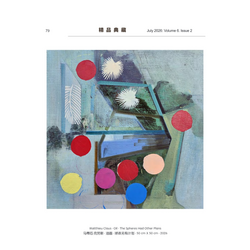
"Twee van mijn schilderijen zijn opgenomen in de Signature Collection van Art Horizons Magazine (Vol. 6, pagina 78 en 79).
Art Horizons is een internationaal tijdschrift dat zich richt op het presenteren van hedendaagse kunstenaars, hun meest boeiende werken en diepgaand kunsthistorisch onderzoek.
"Een enorme dank aan de redactie voor het opnemen van mijn werk in het tijdschrift."
-
The wrong house
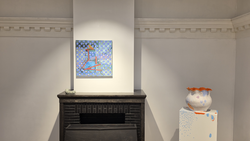
Razzle Dazzle
The title Razzle Dazzle refers to the disruptive camouflage patterns with which warships were painted during the First World War. This visual strategy was not intended to make ships invisible, but rather to break up their contours and disturb perception. In this exhibition, that principle is revisited and recontextualized: pattern becomes a means to unsettle, to seduce, and to open up new ways of reading the image.
Each of the participating artists employs patterns in their own way as a fundamental element of their practice. Paintings emerge from layered motifs that do not simply fill the image but actively construct it. Within the works, patterns develop as strata that rhythmically shape the form, fragment it, or at times intensify it. An optical tension arises in which space, surface, and decoration begin to merge.
These works invite a slow, investigative gaze. Just as we recognize ever-changing figures and images in clouds, the patterns guide us away from the immediate motif. They open mental spaces in which form and meaning continuously shift.
Within Razzle Dazzle, pattern functions as a narrative strategy: a visual language that leads us beyond the purely decorative. What may initially appear as repetition or ornament gradually unfolds into layered images that disorient, entice, provoke reflection, and invite us to drift — far beyond the visible surface.
Curator Jonas Vansteenkiste ©
https://jonasvansteenkiste.wixsite.com/the-wrong-house/kopie-van-we-already-have-enough -
Kunstpoort
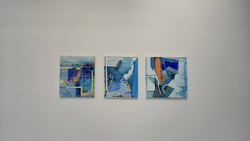
Een expo met Matthieu Claus en Sven Boel in De Clercq-Ginsberg Gallery,
curator Jonas VansteenkisteEr zijn van die expo’s die me bijblijven, ‘Cellular structures’ is er zo eentje. Op de valreep kon ik de tentoonstelling nog gaan bekijken. Zondag 11 mei 2025, op Moederdag, sluiten de deuren; een ideetje voor na de koffie?
Waarom ik me deze tentoonstelling zal herinneren? Er was de hartelijke ontvangst van de bezielers Dimitri Ginsberg en Jimmy De Clercq, de fantastisch mooie locatie, een vroegere smidse en werk van twee kunstenaars die niet met elkaar wedijveren maar elkaar versterken.Matthieu Claus is me niet onbekend. Zijn blauwen blijven me intrigeren. Speelse rasters, lijnen, cirkels, ovalen… doorkruisen het canvas. Bij nader onderzoek bemerk ik met welk vernuft deze werken gecomponeerd zijn, harmonieus en ook chaotisch, ritmisch en toch weer niet, overdonderend en enkele minder temperamentvol… het valt me moeilijk een adjectief te vinden die de volledige inhoud weerspiegelt en dat is zo leuk aan zijn werk, die speelse diversiteit samengebracht in een compositorisch sterk geheel.
De canvassen van Matthieu Claus vormen een perfecte match met de dynamische, guitige sculpturen van Sven Boel. Op de Belgian Art and Design Affair schitterde de kunst van Sven Boel in het wit, hier toont hij verrassend kleurrijk werk. De tentoongestelde werken in De Clercq-Ginsberg Gallery geven me een totaal ander gevoel, tastbaarder met minder mysterie, uitnodigend tot interactie. Vreemd zijn kleuren botsen niet met de blauwen van Matthieu Claus, ze gaan in dialoog.
De opstelling, speels en doordacht, zorgt voor een ruimtelijke en fysische ervaring. Laat de bal maar rollen! Canvassen gluren tussen de sculpturen naar de bezoeker of is het andersom?Straks verstoppen de werken zich in neutraal noppenfolie, de kleuren blijven op mijn netvlies hangen klaar om in mijn geheugen op te slaan.
Kramboer, mei 2025 ©
https://kunstpoort.com/2025/05/10/cellular-structures/ -
'Cellular Structures'
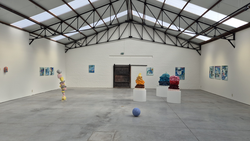
De Clercq en Ginsberg zijn bronsgieters en metaalwerkers die hun expertise ten dienste stellen van van beeldende makers. Hun bedrijf in ‘Uustakker’ heeft een opslag in Beveren-Leie, op de steenweg Gent-Kortrijk. De oude garage herbergt er ook de De Clercq-Ginsberg Gallery, een fijne vierkante industriële ruimte, waar dikwijls interessants te zien is.
Gisteren opende er een duo-expo van Sven Boel en Matthieu Claus, gecureerd door copain Jonas Vansteenkiste, die weer bewijst dat curatoren zeker niet altijd gerateerde artiesten zijn. It really helps als je zelf straf spul maakt. Dan weet je ook hoe je anderen tot hun recht doet komen. Ook hier weer. De maffe rock-n-roll van Boels’ kleurige sculpturen laat zich heel goed pairen met Claus’ schilderwerk. Ik zou de schilder van het duo een ‘Jean Brusselmans’ op speed noemen, omdat ik vind dat zijn abstracten in al hun onthechting iets heel landschappelijks hebben. Het zal wel aan mij liggen, door mijn associatie van zijn gesjabloneerde, getamponeerde, gestempelde en uiteen gehaalde vormentaal, waar ik wolken, heesters en architectuur in ontwaar. Blauw overheerst, volgens de kunstenaar zelf door zijn hunker naar rust in werken die een grafische, nerveuze, gelaagde complexiteit hebben. Er ligt vanalles gestapeld, uiteen gereten en opnieuw gestructureerd in deze doeken. Claus durft ze ook blijvend in vraag stellen en opnieuw overschilderen, zonder compassie. Ze verrasten me door hun subtiele verfhuid, een kwaliteit die in digitale vorm, op een insta-venstertje, onbekend blijft. Reden te meer om ze echt te gaan zien.
Sven Boel injecteert zijn vrijstaande sculpturen met funk, in organische vormen met een snoeperige kleurigheid die veelal in de massa gegoten zit. Zeggen dat zijn vormen gecreëerd werden, doe ze te kort. Hij laat ze eerder ‘gebeuren’ en consolideert ze nadien. De materie werd in hompen geperst of van hoog naar beneden gelanceerd. Het berekende ‘random’ van de situatie doorliep nadien klassieke stadia als mouleren en bewerken. Toeval en controle dus. Happening en sturing. Op zijn charmantst wordt het als Boel je op wandel stuurt met 'm.
Tekst, geschreven door Frederik Van Laere © 2025
Expo ' Cellular structures', De Declerq-Ginsberg Art Gallery, Beveren-Leie
Download PDF
-
The Wrong House
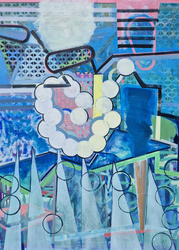
Sven Boel en Matthieu Claus verkennen in hun werk de grens tussen abstractie en figuratie, waarbij ze altijd de interactie met de kijker zoeken. Boels benadering gaat verder dan statische kunstwerken – zijn werken komen pas tot leven wanneer ze een dialoog aangaan met anderen. Hij experimenteert met vormen en materialen en gebruikt kunst als communicatiemiddel, vaak via fysieke interactie of zelfgemaakte mechanismen. In het hart van zijn werk ligt een centrale vorm, een kern die interactie en dynamiek aandrijft. Het gaat niet om het object zelf, maar om de uitwisseling die het teweegbrengt. Claus daarentegen herdefinieert materialen door ze in nieuwe contexten te plaatsen. Zijn werken ontstaan uit afval en afgedankte objecten, die hij transformeert door lagen te verwijderen, te herstructureren en te overschilderen, waardoor ze een nieuwe betekenis krijgen. De essentie van Claus' werk ligt vaak in een onderliggende vorm – een 'cel' die zich door de lagen heen openbaart en de structuur van zijn schilderijen bepaalt. Zijn abstractie is niet alleen visueel, maar ook emotioneel geladen – een uitnodiging om de verborgen ritmes en structuren te ontdekken die bestaan tussen het zichtbare en het onzichtbare. Beide kunstenaars zoeken naar een essentiële vorm die als fundament van hun werk dient – een kern die hen in staat stelt de verschillende lagen binnen hun creaties te verkennen. In deze centrale cel of vorm vinden ze de basis voor hun onderzoek naar interactie, hercontextualisering en de ruimte tussen het zichtbare en het onzichtbare.
Curator: Jonas Vansteenkiste & Isabelle Bergmann
Download PDF
https://jonasvansteenkiste.wixsite.com/the-wrong-house/kopie-van-city-trip-2 -
The Art Couch - Hold the Line’, Intra Muros Art Gallery - Patrick Auwelaert
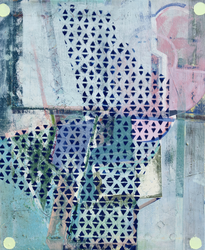
Recyclage
Van het kwartet is alleen Matthieu Claus (1977) ons bekend. Wij maakten kennis met zijn werk in de groepsexpo Zomers abstract in Kunstforum De Koolputten te Waasmunster in de zomer van 2024. Claus, die woont en werkt in Gent, schildert veelgelaagde en kleurrijke abstracte doeken in olieverf waarop lijnen, geometrische patronen en organische elementen een afgewogen geheel vormen. Kijkend naar zijn werk, lijkt je oog zich aanvankelijk moeilijk te kunnen oriënteren: je blik glijdt richtingloos van het ene deel van het canvas naar het andere. Onwillekeurig zoek je naar aanknopingspunten die je moeten toelaten om het geheel te doorgronden, te begrijpen, er een touw aan vast te knopen.Blijven kijken is de boodschap. De blik heeft tijd nodig. Gaandeweg herken je geabstraheerde landschappen waarvan gedeelten tot stand zijn gekomen met behulp van sjablonen van cirkels, vierkanten, rechthoeken, driehoeken, ruiten en raten. Het lijken wel picturale assemblages, samengesteld uit wat er op het eerste gezicht uitziet als industriële componenten: restanten van schroothopen, bouwwerven, braakliggende terreinen en verlaten sites. Met hier en daar enkele toefjes groen in bewust slordige schilderstreken, verwijzend naar vegetatie. Je moet er bij denken aan beton, bakstenen, verwrongen staal en verroest ijzer waartussen weerbarstig onkruid opschiet. Afgedankte materialen die alleen nog goed zijn voor recyclage.
Gele stippen
En laat het nu precies dáár om gaan in Claus’ werk. Letterlijk, in die zin dat de kunstenaar afgekeurde doeken hergebruikt door ze grotendeels te overschilderen en zo nu en dan bepaalde delen van de oorspronkelijke voorstellingen mee te laten spelen in de nieuwe composities – een werkwijze die ook Sam Dillemans geregeld toepast. De kunstenaar schraapt daarnaast soms verflagen af om er nieuwe lagen overheen te schilderen. Het matte, gladde en vale van de afgeschraapte lagen contrasteert fel met de verfpartijen die hij intact laat.Afbeelding verwijderd (2024), één van de vier doeken die Claus bij Intra Muros tentoonstelt, doet zijn titel alle eer aan: het schilderij is helemáál afgeschraapt, wat niet wil zeggen dat er niets meer te zien is op het doek. De oorspronkelijke voorstelling is gebleven, alleen maakt ze een afgebleekte indruk, te vergelijken met een fotokopie van een afbeelding gemaakt op een fotokopiemachine waarvan de kleurtoners aan hun laatste restjes inkt toe zijn. Omdat Claus nadien het gevoel had dat er iets ontbrak aan het doek, bracht hij in elke hoek ervan een gele stip aan. Die stippen maken het werk helemaal af. Ze pinnen de voorstelling bij wijze van spreken vast als met duimspijkers.
Eyecatcher
Een ander tentoongesteld werk van Claus, De ontsnapping (2024), is een schoolvoorbeeld van hoe essentieel weglating kan zijn. Centraal op het doek zien we een compositie die bestaat uit over elkaar heen geschilderde geometrische patronen (vierkanten en driehoeken), lijnen van verschillende dikte en landschappelijke elementen. De eerder gedempte kleuren krijgen een contrasterend accent mee in de vorm van een rechte hoek in azuurblauw. Maar wat vooral opvalt aan het doek is de grote hoeveelheid wit boven en onder de centrale voorstelling, hier en daar onderbroken door overschilderde lijnen.Te midden van de drie andere tentoongestelde werken van Claus is De ontsnapping een eyecatcher. De centrale voorstelling, met haar talrijke, vaak subtiele kleurvlakken, knalt als het ware uit het wit tevoorschijn. In de Chinese cultuur wordt wit gezien als de kleur van de dood. Zo bekeken is wat op het doek aan het wit ontsnapt een ode aan het van kleur tintelende leven. Het is wellicht niet toevallig dat de schilder in een gesprek met ondergetekende aangaf in de nabije toekomst te streven naar soberder werk, waarmee hij bedoelde meer ruimte te willen geven aan wit, zodat wat daarvan gespaard blijft des te levenskrachtiger overkomt.
Download PDF
https://www.theartcouch.be/nieuws/hold-the-line-lijnen-troef-bij-intra-muros-art-gallery/ -
KUNSTPOORT - De blauwen van kunstenaar Matthieu Claus - Kramboer
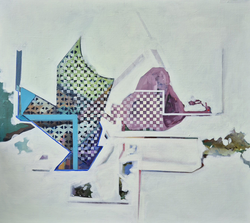
Matthieu Claus is voor kunstpoort geen onbekende. Voor het eerst kregen we werk van hem in het vizier tijdens de expo Kaleidoscoop, TaleArt Gallery te Vlierzele. Nu hadden we een nieuwe ontmoeting met zijn kunst tijdens de tentoonstelling Zomers abstract. Twaalf schilderijen van de kunstenaar sieren de muren van het Kunstforum De Koolputten te Waasmunster.
De expo ‘Zomers abstract’ is een confrontatie van drie hedendaagse kunstenaars: Catharina Dhaen, Christine Roggeman, Matthieu Claus, met drie kunstenaars van een oudere generatie: André Lanskoy, Eugène Leroy en Joseph Lacasse. De tentoonstellingen van Kunstforum De Koolputten zijn zowel hedendaags als traditioneel. Het Kunstforum brengt telkens andere thema’s en linkt het verleden aan het heden met kunst van diverse generaties, zowel lokale als nationale, kunstenaars.Bij een eerste oogopslag zijn het vooral de blauwen in de schilderijen van Matthieu Claus die bekoren. Vergeet voor eenmaal het blauw van Yves Klein en laat je bekoren door de poëtisch blauwe tinten van Matthieu Claus. Ze zijn moeilijk te benoemen, kobaltblauw, appelblauw, luchtblauw, lichtblauw, grijsblauw, pruisisch blauw, koningsblauw… blauw met een vleugje magenta… in twee woorden, het zijn ‘magische blauwen’ die zijn schilderijen een speelse lichtheid schenken.
Abstract is een allesomvattend begrip. Bij Matthieu Claus is abstract meer dan een begrip, zijn ‘abstracten’ blijken niet zomaar abstract. Lees stilletjes de zorgvuldig gekozen titels, ze openen de deur naar een bredere kijk op zijn canvassen. Er is ‘Stof tot nadenken’ ‘Buiten (wolkje)’ ‘Tuingedicht’ en er is ook ‘een vreemde eend in de bijt’. De vlag dekt de lading. Bij Matthieu Claus is abstract meer dan een ontastbaar begrip. Een werkelijkheid houdt zich schuil achter rasters, verstopt zich tussen lijnen en vlakken, in vaak gedempte, minder felle kleuren. De vreemde eend in de bijt kan je met een beetje fantasie tevoorschijn toveren.
Soms wordt het blauw te machtig zoals in ‘De ontsnapping’ en verovert heel veel wit het canvas, het blauw ontsnapt dan aan het oog van de kijker. En… het landschap speelt verstoppertje.De subtiliteit van zijn werk vraagt om een aandachtig kijken. De schoonheid zit hem in de details, in de lagen, de verfnuances, het bewust overschilderen, de zachte zichtbare penseelstrepen… Ik word er lyrisch van en vind moeilijk de juist woorden, hoewel woorden niet nodig zijn.
Probeer als toeschouwer zijn schilderijen te ervaren, te beleven en je vergeet ze nooit meer. De uitzonderlijke blauwen blijven op het netvlies hangen. Na een poosje hoor je een vleugje piano muziek aanzwellen op de achtergrond.Opmerkelijk vind ik de confrontatie van ‘Stof tot nadenken’ met het schilderij van Catharina Dhaen ‘Zo onbezorgd stil en vrij’. De kleuren spreken met elkaar en zijn als bondgenoten die samen de kunst van beide kunstenaars laten schitteren. Mijn verbeelding slaat op hol, ik zie bij beide een landschap, akkers, bergen, zelfs industrie en heel eventjes denk ik, bij het schilderij van Catharina Dhaen, aan Raveel.
De schilderijen van Matthieu Claus zijn ongelooflijk aantrekkelijk door een eigen kleurengamma, hun speelse vormen en hun vraag om interactie met de kijker. We zijn benieuwd naar het vervolg van zijn carrière en misschien weet hij nieuwe horizonten uit zijn penseel te toveren.
https://kunstpoort.com/2024/08/13/de-blauwen-van-kunstenaar-matthieu-claus/ -
The Art couch - Zomers abstract, picturale lyriek in Waasmunster -Patrick Auwelaert
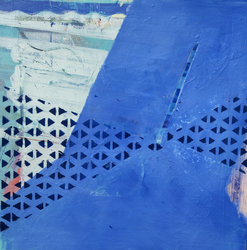
Waar begint en eindigt abstractie en waar begint en eindigt figuratie? De grenslijn is niet altijd zuiver te trekken. Wie lang genoeg kijkt naar een werk dat als abstract wordt voorgesteld, ontdekt er niet zelden aanzetten tot figuratie in. Anderzijds bevatten tal van figuratieve schilderijen partijen die als abstract kunnen worden aangeduid. Die schijnbaar paradoxale dualiteit is ook aanwezig in Zomers abstract. Soms zet de titel van een werk de toeschouwer op het juiste pad. Zo heet een van de tentoongestelde werken van Matthieu Claus (Kortrijk, 1977) Een vreemde eend in de bijt (2022). Als geoefend kijker heb je maar een fractie van tijd nodig om in het veelkleurige geheel van geometrische en amorfe of organische elementen waaruit de compositie bestaat de schematische vorm van een eend te herkennen. Hetzelfde geldt voor nagenoeg alle werken van Claus in de expo: ze hebben een beschrijvende titel die overeenkomt met wat er op het doek vaak moeiteloos te herkennen is, zonder dat dat veel afbreuk doet aan hun abstracte status.
Claus is trouwens net als Catharina Dhaen (Antwerpen, 1992) en Christine Roggeman (Sint-Niklaas, 1988) een naam om in het oog te houden. Zijn veelgelaagde composities houden het midden tussen geometrische en lyrische abstractie, maar hellen door hun vaak uitbundige en warme kleuren vooral over naar de gevoelvolle vorm van abstractie. Inspiratie put de kunstenaar onder meer uit bouwwerven, industriële sites met geritmeerde staalplaten die een repetitieve en structurerende impact op het doek uitoefenen, betonblokken met gietijzer en afgedankte materialen. Zoals een schrijver moet schrappen en herschrijven om tot een uitgepuurde taal te komen, zo schraapt Claus soms verflagen af om ze te herschilderen. Als een meccanobouwer met verf construeert en deconstrueert hij zijn doeken tot ze volmaakt in balans zijn en voegt er gaandeweg landschappelijke elementen aan toe. Zo nu en dan doen ze, wat de architecturale opbouw en de dieptewerking ervan betreft, denken aan het werk van Mil Ceulemans en Tina Gillen.
https://www.theartcouch.be/nieuws/zomers-abstract-picturale-lyriek-in-waasmunster/ -
Kunstcahier 't kunstforum
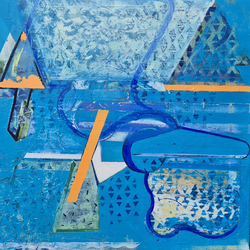
Daar en is geen konste onder den hemelvonden
oft een oprecht schilder en heeft er af ’t verstandschreef schilder-dichter Lucas d’Heere in 1565 in zijn betoog ter verdediging van de schilderkunst dat hij richtte aan de Antwerpse rederijkerskamer De Violieren. Vertaald naar vandaag zegt deze uitspraak dat er geen kunst, geen subject op aarde is of een gedegen schilder heeft er inzicht in. En met deze eigenschap kom ik tot het introspectieve werk van Matthieu Claus die als beeldend poëet een ambigue relatie aangaat met de werkelijkheid. Zijn beeldtaal verraadt een perfect gedoseerde symbiose van een met gevoel doordrongen intuïtie en een weidse kijk op de micro werkelijkheid van zijn leefruimte: de natuur, het landschap, de architectuur, de industrie. Schoonheid ligt zowel vervat in de witte magie van een wolkje als in de schroothoop van industrieel afval. Het zomers uitbundig kleurgebruik primeert weliswaar op het onderliggend raadselachtig verhaal, de vingerwijzing of de knipoog: zijn gedachtenkronkels die evenwel een mogelijke verduidelijking krijgen door de prozaïsche titels waardoor de band met de realiteit nooit ten volle verbroken wordt. Deze olieverfschilderijen evoceren een concentratie van associaties, suggesties en prikkels waarin we noodgedwongen een werkelijkheid pogen te herkennen, of althans een illusie van werkelijkheid, want deze is zeker niet absoluut, zelfs niet uit elkaar te houden. De bevroren beweeglijkheid op het beeld werkt begoochelend en houdt de illusie van een aanwezigheid vast. Een blik die vragen stelt. Tussen de gelaagdheid van de verfzetting, soms schraal en transparant, dan weer korrelig en pasteus, schuilt een intrigerend speelveld waarin arabeske lijnen flirten met geometrische patronen en repetitieve structuren. Een invuloefening voor de beschouwer. De exploratie wacht om in het overwegend appelblauwzeegroen als kleurveld een eigen verhaal te projecteren. In die verankering van spiritualiteit en symboliek komen niet enkel de gebruikelijke codes van waarneming, maar ook de zelfbeschouwing op de helling te staan.
curator Freddy Huylenbroeck ©
Download PDF
-
The Art Couch - Kaleidoscoop - review Yves Joris
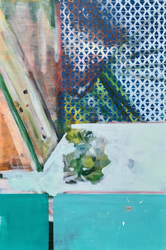
Schrijven is schrappen, schilderen is schrapen: Matthieu Claus
Matthieu Claus schraapt, overschildert en hergebruikt de lagen, waardoor een spel van kleur ontstaat dat de toeschouwer uitnodigt om zijn eigen verhaal te ontdekken. In zijn recente werk laat hij zich inspireren door de graffiti-scène en stedelijke omgeving, waar hij speelt met verborgen patronen en contrasten, wat zijn werk een speelse en dynamische uitstraling geeft. Zijn interesse in geometrie en vorm, ontwikkeld tijdens zijn studie aan de KASK Gent, komt ook tot uiting in zijn werk. In deze tentoonstelling toont Claus een selectie van zijn recente werken, die getuigen van zijn artistieke evolutie en experimentele aanpak. Zijn schilderijen zijn een expressie van zijn gedachtenkronkels, vertaald in kleurrijke en gelaagde composities. Hij nodigt ons uit om deze kleurrijke fictieve landschappen te betreden en te genieten van de visuele en emotionele ervaring die ze bieden.
https://www.theartcouch.be/nieuws/kaleidoscoop-een-kleurrijke-reis-door-de-kunst/?sfw=pass1707458774 -
Kunstpoort
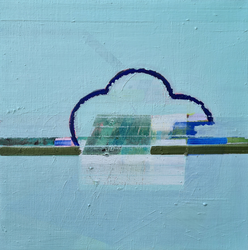
Wat Matthieu gemeen heeft met de andere kunstenaars is het gebruik van uitbundige kleuren. Blauwen en groenen verraden dat de kunstenaar een landschap verbeeldt. Rasters en strakke lijnen doen me denken aan een stedelijk industrieel landschap. Matthieu Claus ploetert op het canvas, is niet tevreden met één enkele laag. Zijn werk vraagt om introspectie. De kunstenaar is niet alleen een schilder maar ook een bouwvakker die construeert, laag na laag, soms aarzelend en vaak trefzeker tot een doorwrocht resultaat uit de verf naar voor treedt en het canvas klaar is voor bewonderende en vragende blikken van de toeschouwer.
Plots zie ik een wolk, is het wel een wolk? Mijn verbeelding slaat op hol. En dit is terug wat Matthieu Claus met de andere kunstenaars gemeen heeft, hij doet beroep op de creativiteit van de toeschouwer.
Tekst Kramboer (Expo Kaleidoscoop, TaLeArt Galerie '24)
https://kunstpoort.com/2024/02/03/de-kaleidoscoop-van-tale-art/
